Material
Colouring Architectural Detail With Confidence
A room's architecture is its framework, and colour can celebrate it. Cornicing, panelling, beams, and alcoves all respond to considered paint. Highlig
A traditional breathable finish explained, from its chalky character to its vital role on old and solid-walled buildings.
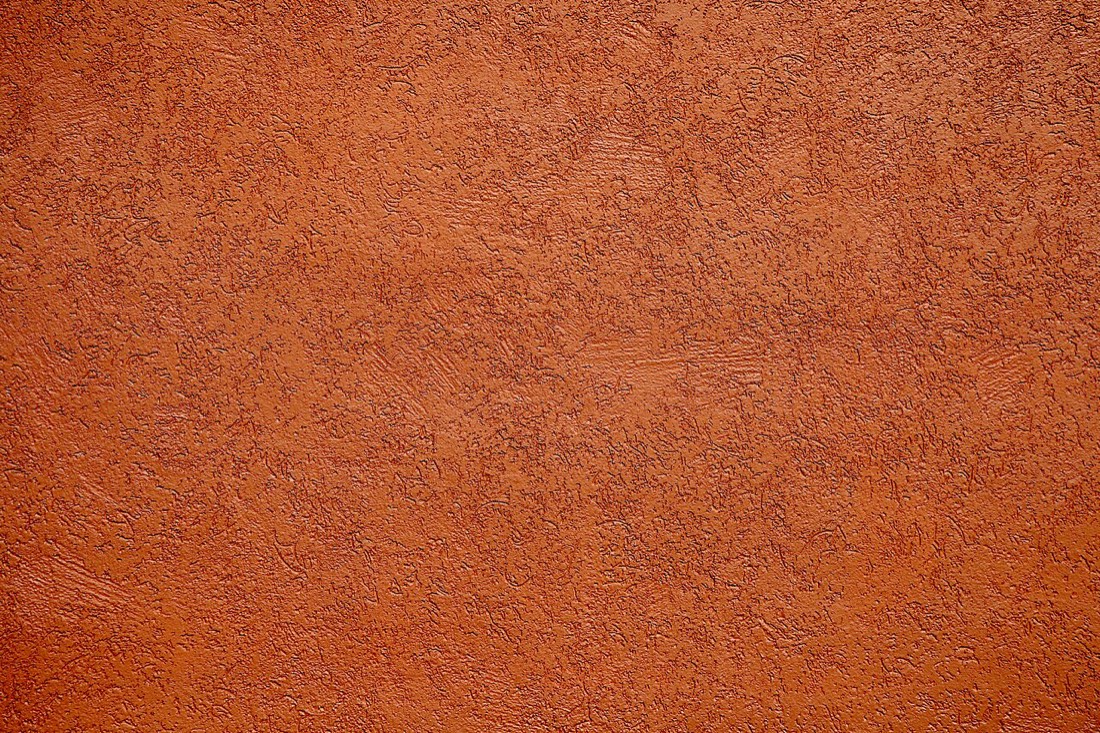
Lime paint, sometimes called limewash, is one of the oldest decorative coatings and has enjoyed a strong revival, both for its distinctive soft, chalky appearance and for its practical suitability on older buildings. It is quite different in character from ordinary modern emulsion, and understanding what it is and where it belongs helps explain why it is prized in some settings and unsuitable in others.
In its traditional form, lime paint is made from lime that is suspended in water and often loosely tinted with pigments. Applied to a wall, it works by a natural process: as the water evaporates and the coating is exposed to air, the lime reacts with carbon dioxide and effectively turns back into a form of mineral close to the stone and lime from which it came. This is why limewash seems to become part of the wall rather than sitting on top of it as a plastic-like film, and why it develops its characteristic matt, slightly mottled, textured and gently luminous surface that so many find appealing.
The single most important property of lime paint is that it is highly breathable, meaning it is vapour-permeable and allows moisture within the wall to pass through and evaporate freely. This matters enormously for old and historic buildings, which were typically built with solid walls and lime-based mortars and renders, without the damp-proof courses and cavities of modern construction. Such walls are designed to manage moisture by letting it move through and evaporate, and they need coatings that breathe with them. Sealing a solid, old wall with a modern impermeable paint can trap moisture in the structure, leading to damp problems, blown plaster and decay. Lime paint, being breathable, works in harmony with these buildings instead of fighting them.
Lime paint is therefore most at home on traditional and period properties with solid walls, lime plaster and lime render, both internally and externally, and it is widely used in the sympathetic repair and decoration of old buildings for precisely this reason. It suits porous, mineral surfaces such as lime plaster, lime render, brick and stone, bonding into them as it cures. Its soft, deep, light-handling finish also lends a particular quiet character to interiors that many seek for aesthetic reasons alone.
There are, equally, places where lime paint is not the right choice. On modern buildings with impervious surfaces, or over existing coats of ordinary emulsion, lime paint cannot bond or cure as intended and will not perform or adhere properly, since it needs a porous, receptive mineral surface to grip and carbonate into. Using it on the wrong substrate simply leads to a powdery, failing finish. It also behaves differently to apply than emulsion, is usually built up in several thin coats rather than one or two thick ones, and, being lime-based, is alkaline and caustic when wet, so skin and eye protection and good ventilation are sensible precautions during application.
In short, lime paint is a specialist, traditional material with a clear and valuable role. On old, solid-walled, lime-built properties it is often not merely an aesthetic choice but the correct technical one, allowing the structure to breathe and manage moisture as its builders intended. On modern surfaces it is generally the wrong tool. Chosen for the right building, limewash offers a finish of genuine beauty and historical authenticity that no ordinary emulsion can imitate, while quietly doing the structural job the wall needs.
A room's architecture is its framework, and colour can celebrate it. Cornicing, panelling, beams, and alcoves all respond to considered paint. Highlig
White seems like the safest colour choice, yet it is one of the trickiest. There are countless whites, each with a hidden undertone. A white that glow
Colour drenching is the practice of painting walls, ceiling, woodwork, and often doors in an unified shade. The effect is immersive, wrapping a room i